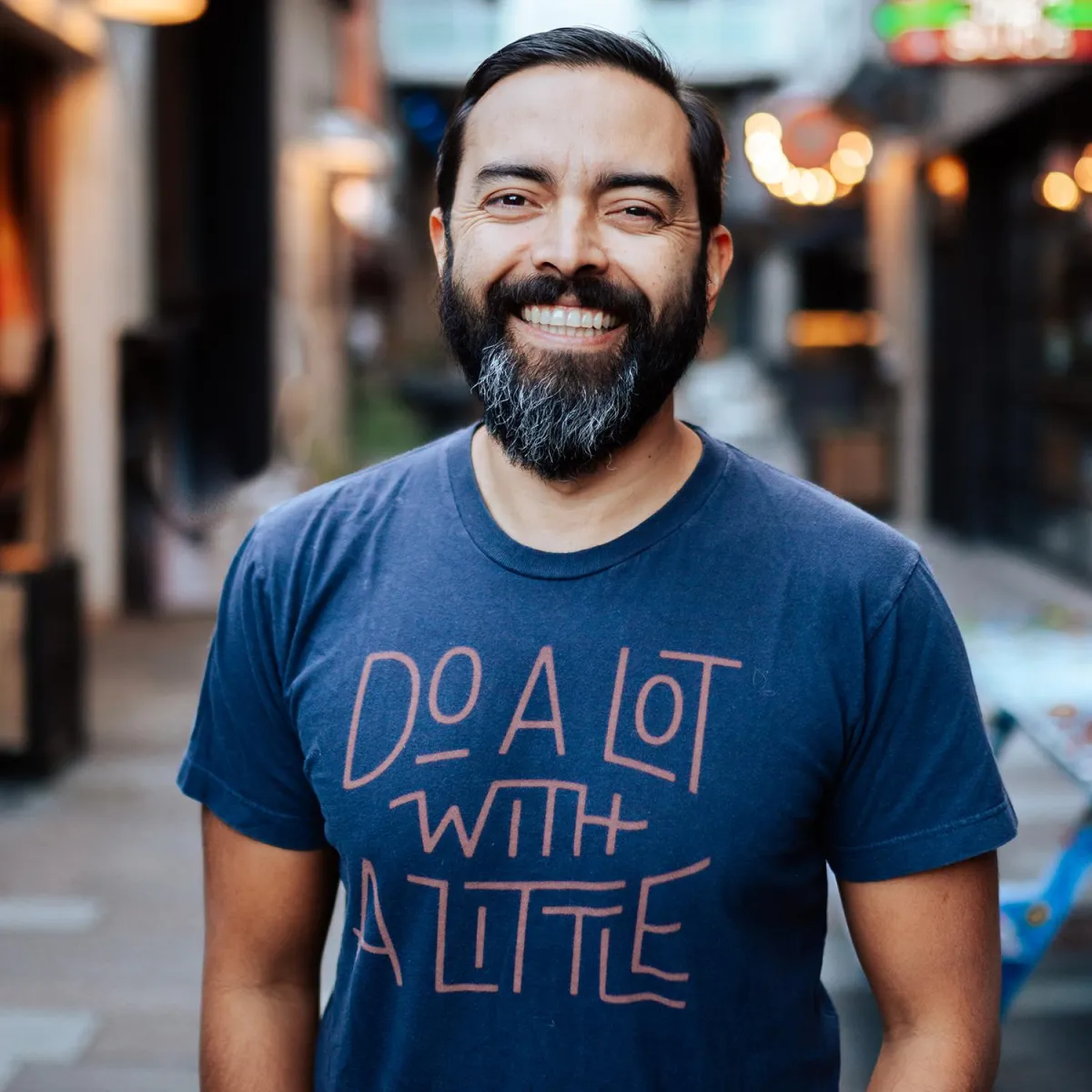
Pat Flynn
Founder of Smart Passive Income
Topic: The Hero's Journey Strategy That Makes Customers Your Best Salespeople


Audio Only
AI Transcript
Bill Ross: Today's guest is Pat Flynn, who is a proud father and husband, as well as one of digital entrepreneurship's most influential voices, reaching millions monthly through award-winning podcasts, the SPI community, and the Deep Pocket Monster YouTube channel. He's the best-selling author of Will It Fly? Superfans, and Lean Learning, co-inventor of SwitchPod, and creator of Card Party.
Pat inspires entrepreneurs with practical business advice, heartfelt leadership, and a passion for helping others succeed.
Pat, welcome to our expert interview series.
Pat Flynn: Thank you so much, I'm excited for this.
Bill Ross: Great! So I know we don't have a lot of time. The idea is to get some great content into our listeners' hands real quick, so I'm gonna go ahead and jump into the question, which is, what is the most effective strategy you recommend for business owners to increase sales while also strengthening their company's reputation?
Pat Flynn: I love this question because there are a million different strategies out there, and we want the ones that are gonna work. And there's one strategy that I've always used that has worked more than anything else, and it doesn't matter if you have a podcast, or just social media, or maybe a blog, maybe a YouTube channel.
The number one strategy you can use is something that I got inspired by a good friend of mine, Donald Miller, who wrote a book called Building a Story Brand.
And building a story brand is really about making your customers, your subscribers, your followers, they are the heroes of the story.
You are not the hero of the story, you are the guide, you are the Obi-Wan, right? And your customer is the Luke Skywalker, right? And Luke Skywalker has flaws, and they have challenges, they have things that aren't always perfect with them, and it's the guide that helps them through those challenges.
And when… people see that this person, or your subscriber, your student, has overcome those challenges. Thanks to you, guess where they're going to want to go to go experience the same thing?
You. So, for example, when I first came out with my podcasting course, this was a while back, but I knew this would work, and it did, we ran a beta group with some of our students, and I interviewed 3 of them to come on my show.
Three who had done very well through my course and had started their own podcast. And when I invited them on my podcast, I didn't ask them to tell me why my course, Power Up Podcasting, was the best course in the world, and why they should recommend it to everybody.
I asked them first why they wanted to start a podcast in the first place. It really brought down to earth the why behind the reasoning to start a podcast, which the listeners could relate to.
And then I asked them. what took you so long? Why were you struggling to start a podcast, even though you wanted to do this for a while? And they started talking about the obstacles, the struggles, the hurdles that they had to overcome. For example, one of the people I interviewed, her name is Dr. B, she helps people with ADHD and who live with people with ADHD.
She had wanted to start a podcast for so long, but she was over 65 years old. She thought she just didn't have the technical know-how to start a podcast. And without even prompting her.
She goes, Pat, but your course, oh my gosh, you made the technology stuff so much easier for me.
The best testimonial that I could ever ask for, without even asking, because I was collecting her story. I was considering what transformation she went through, which is why I started in the beginning.
And then at the end, I would go, well, what kinds of things did you learn? from the course. And of course, she just kind of went on and on and on, and even brought some really cool, interesting stories that I would have never thought about, because I didn't know, but she even mentioned that, she had just recently saw that in her analytics for her new podcast, that she actually started on her own.
She was… She had just crossed 30 different countries that her podcast was now in, and she has this map behind her computer where every time she gets in a new country, she posts a pin.
And what am I doing right now? I'm telling you a hero's journey. with one of my customers right now, right here on the show, it's kind of meta. And you can kind of relate to that, you can understand that, you can imagine it. It's worth more than any generic testimonial. It's collecting that story, and then sharing that story. So the more that you can get better at, not just collecting these testimonials, but learning how to tell their story. the better off your brand will be, the more products you'll sell, absolutely.
But they're also gonna see there's real people who have taken action with you, and they're gonna see that you are the person that they took action with. And the human-to-human connection's so important now, because you could share any information that exists out there. There's so much information, it's too much.
People want real, because we don't even know what's real anymore. So bring those real stories to light, and you're gonna see some incredible success.
Bill Ross: Amazing. So, if I understand correctly, please correct me if I'm wrong.
You're taking testimonials, so the key factor number one is customer testimonials, and then you're actually building the story for that testimonial. Is there a framework that you use in that story creation process?
Pat Flynn: Yeah, I mean, for example, we have online courses. At the end of our online courses, we often ask, you know, how did you enjoy your experience? And if we see somebody's like, this was amazing, thank you so much, boom, let's get on a call with them. I want to uncover and unpack why this was a great experience. Why did you come in here in the first place? And what about it made it great for you?
And in those conversations, whether they're recorded for a podcast or just purely for our own information so we can better find more people like that, or in some cases, we've invited them on our public podcast in front of tens of thousands of people, because it's a great story.
We, again, want to understand what was the reason why they were interested in the transformation in the first place, right? Before they even came to us to get that solution. What was hard about it? What were the obstacles?
What was it about our product that made it different than the other experiences that you've had?
And this is a great one because it often empowers these people. What would be a recommendation or tip that you have for somebody who's brand new to this? Right? Again, not saying why should they get into our course, or why should they buy our product, but now that you're on this side of it, what would you tell somebody who's right at the beginning?
9 times out of 10, they're going to mention your product.
Which is, again, unprompted, and it's the most genuine kind of thing that you can get. You just are kind of guiding the conversation in that way. And if you really think about it in terms of a framework.
It's the Hero's Journey Framework.
It's what was the world they lived in. what's the world they live in now? AKA, how has their life opened up? What… things have they now gotten access to that they didn't have to before because of you? And then filling in the gaps in the middle. Well, what were the dragons that you slayed? What were the problems that you had? Who was the guy that you went to? The Hamitch in Hunger Games? The Obi-Wan Kenobi in Star Wars?
You are that to your people, and that's so powerful.
And it also takes you out of the spotlight as, like, oh, look at us! Look at how awesome we are! No. Let us have our actions and our students and our customer success do the talking for us.
Bill Ross: Fantastic. I think that's amazing advice. Just to sort of recap, in my own mind, if I'm going to go ahead and try to remember how to frame the story and create the hero's journey, I should probably go rewatch Star Wars, and really pay attention to how Obi-Wan, you know, takes care of and trains and teaches Luke Skywalker at some point in time. Does that make sense?
Pat Flynn: Yes, absolutely, I love the way you frame that.
Bill Ross: Alright, I do have one more quick question for you, our time's up, I appreciate it. If people want to know more about you, your services, the things you do, how can they get ahold of you?
Pat Flynn: Sure, thank you. If you go to SmartPassiveIncome.com, that's sort of the hub for all the things we do, and our unstuck newsletter is a great opportunity and resource to get an email from me every single week to get unstuck from the plateau that you're on right now, but smartpassiveIncome.com.
The books, the resources, the email lists, the courses, the community, it's all there. And explore, and you are bound to find something, for sure.
Bill Ross: Fantastic. I appreciate it. Thank you for spending your time with us today. Hope to catch up with you soon.
Pat Flynn: Thank you, Bill, appreciate it.